
Play Oware Against AI
How to Play Oware
Six houses a side in a loop, four seeds each, South opens. Tap a non-empty house on your row and sow counterclockwise among houses only; after one sow, play passes. Land leaving 2 or 3 on the opponent’s side to capture. Pick an AI level and a seat, then start.
What Oware Is
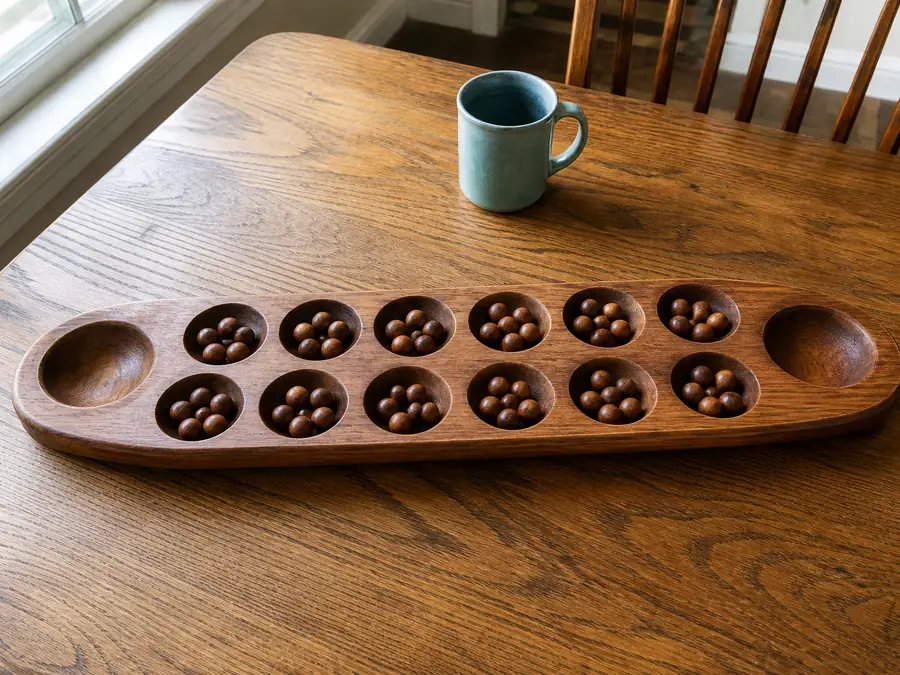
Oware is a West African sowing game. It belongs to the wider mancala family, but it is not the same game as the Kalah-style boards many people learn first. This site follows Abapa, the version common in Ghana and nearby traditions: twelve houses in a loop, six a side, four seeds in each house at the start, and South to open.
What decides a game is landing count, not an extra turn in a store. Seeds sow counterclockwise among houses only; after one sow, play passes. A last seed that leaves 2 or 3 on the opponent’s side starts a capture. When their row is empty, you may have to feed, and more than 24 in score wins.
It looks like moving beads around a board. In practice it is about tempo: when to chase a 2–3 chain, when to keep seeds back, and when you must send something across. The rules page covers the fine print; if you want the feel of the game, start with the AI board above.
Count the Last Landing First
Do not empty a house just because it looks tidy. First count where the last seed finishes: landing on the opponent’s side as 2 or 3 is often worth more than a quiet reshape, and South can practise that count from move one.
Only 2 or 3 Starts a Capture
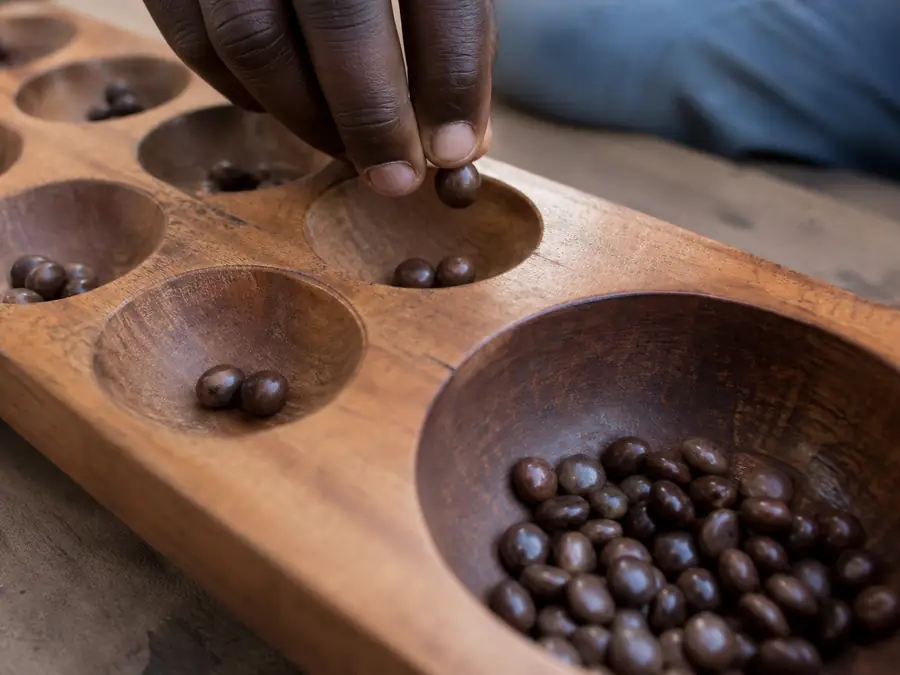
Captures happen only on the opponent’s houses. If the last seed leaves 2 or 3, take that house, then continue backward through consecutive 2s and 3s. If the chain would clear every seed they still have on the board, the grand slam is void and you score nothing from it. When their side is empty, remember to feed.
Hints Follow Your AI Level
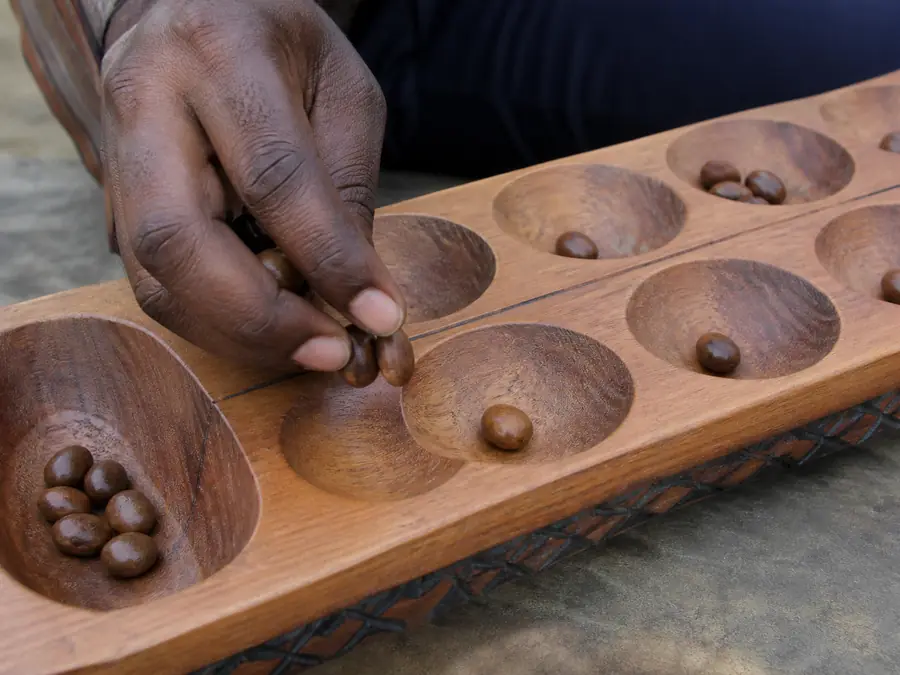
Choose from multiple AI levels, then play as South to open or North to reply. Hints use the same level, and undo rewinds both your sow and the AI response. After the game, replay the turn when a 2–3 chain appeared or a feed was missed. All AI calculation stays in your browser.
12houses in a loop
4seeds in each house
2–3starts a capture
>24in score wins
Common questions
Which rules does this board use, and how do you win?
The default is Abapa, the version common in Ghana and nearby traditions: twelve houses in a loop, six a side, four seeds in each house at the start, and South to open. Seeds sow counterclockwise among houses only; after one sow, play passes, with no extra turn. A last seed that leaves 2 or 3 on the opponent’s side starts a capture. More than 24 in score wins; 24–24 is a draw.
How is this AI different from a typical web sowing game?
The search runs in your browser. Nothing is sent away for a reply. The sidebar has multiple strengths: start with a gentler level and try ideas freely, then step up when the landings feel too easy. Hints follow the level you already picked; they are not a stronger engine hiding behind the button.
Why did I land on 2 or 3 and still capture nothing?
Captures happen only on the opponent’s houses. If the last seed leaves 2 or 3 there, you can take that house and keep going backward through consecutive 2s and 3s. If that chain would clear every seed they still have on the board, the grand slam is void and you score nothing from it. The sow itself is still legal; you just do not score.
Does the first move have to start from a particular house?
No. This board does not require the opening sow from a fixed house. Counting where the last seed lands—your side or theirs, and whether it becomes 2 or 3—matters more than memorizing one pit.
How should I use hints, undo, and replay without just copying the answer?
Pick a house yourself first, and say whether you want a 2–3 chain, a quiet reshape, or a feed. Then open the hint and compare. The hint follows your current AI level. Undo takes back your sow and the reply together, so you can try the fork again. Replay is for finding the turn where a chain was missed, or a feed that should have been sent.
Can I play without an account or an app?
Yes. Open the page on a phone or computer and sow. There is no account, email, or password. Adding the site to your home screen is optional, and a full game works without installing anything.
Can I choose to sit South or North?
Against the AI, yes. As South you sow first. As North the AI opens. Switching seats mid-game starts a new game, and the seeds already sown do not stay. In an online room you pick your side when you create it. Two players on one device do not choose seats: South opens, and you take turns.
If I close the page, is this game still there?
Games against the AI, and games on one shared device, stay in this browser. The two modes keep separate records. Close the page and open it again, and you can usually pick up the last game. Clearing this site’s data usually removes those unfinished games. An online room is kept with the room itself. If the connection drops, opening the room again usually brings you back to the same game.
If I invite a friend online, can I undo and use hints the way I can here?
No. Once an online room accepts a move, that move is sent to the other player. There is no hint and no solo undo. Either player can resign or offer a draw. If the connection drops, opening the page again usually brings you back to the same room. After both players leave, the room usually stays available for about 20 minutes.
How is two players on one device different from playing the AI?
Two people share one device and take turns face to face. You do not need a network connection, and neither side gets a hint. Undo and replay stay available, so you can stop and talk through a move. South always opens, so a fair short set is two games with the seats swapped. The board stays the 12-house Abapa loop, on this one set of rules.
